v1.0.6 is live for macOS and Linux.

DOWNLOAD
Back to blog
Apps & Alternatives

Best WebCatalog Alternatives for Turning Websites into Desktop Apps

Explore the best WebCatalog alternatives for turning websites into desktop apps. Compare tools with stronger session isolation, workspace organization, and multi-account support.

Written by BallonieMay 13, 20265 min read
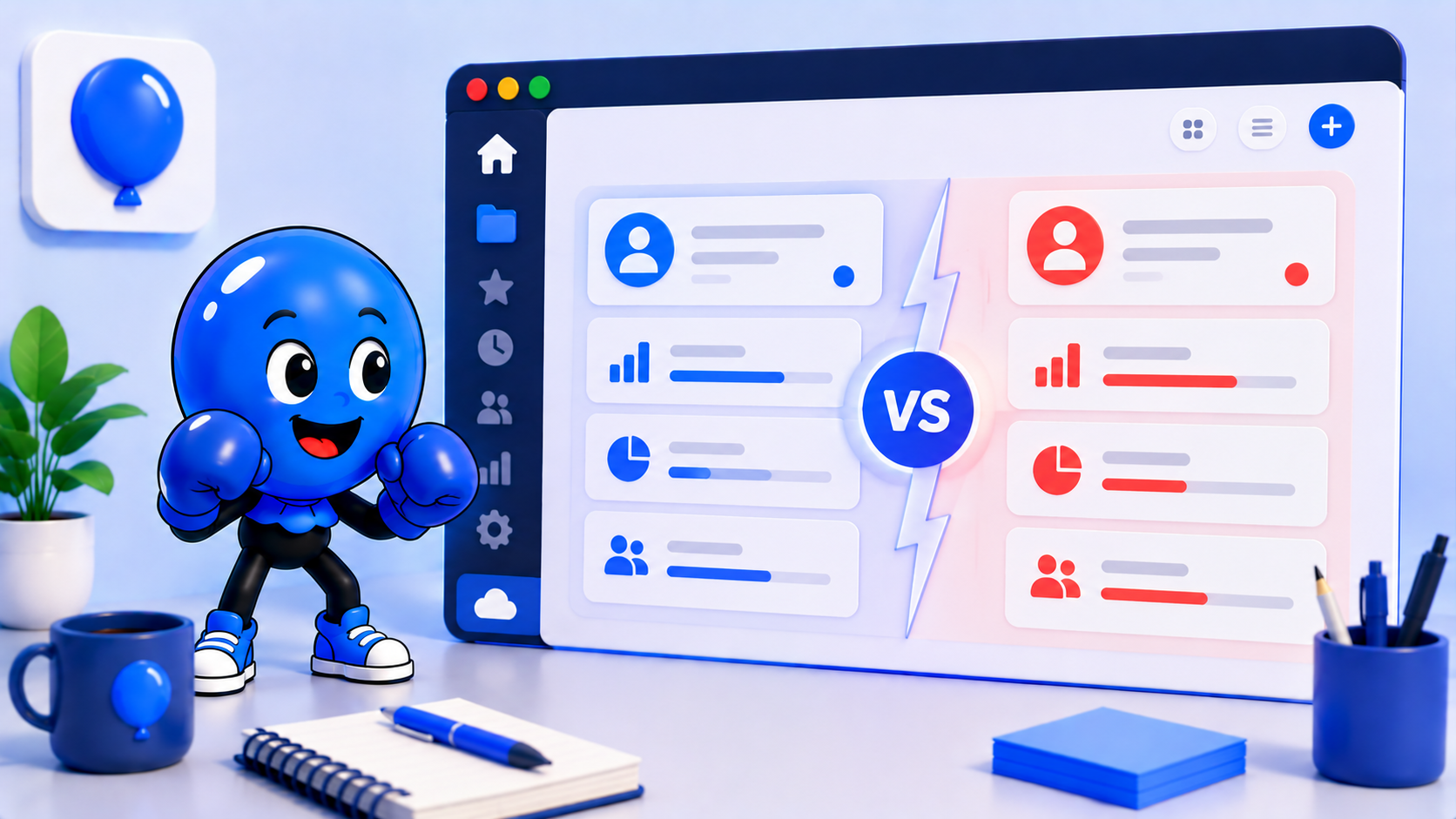
weballoon and WebCatalog alternatives comparison for turning websites into isolated desktop apps.
webcatalogalternativescomparisonproductivityworkspace browserdesktop appsapp isolation

Quick Comparison

ProductBest ForPlatformsIsolated SessionsWorkspace OrganizationPricing StyleNotable Strength
weballoonIsolated desktop web apps with local-first designmacOS, Windows, LinuxPer-app cookie/storage isolationWorkspaces + default viewFreemiumTrue session isolation per app entry
WaveboxIntegrated web apps with deep service connectionsmacOS, Windows, LinuxContainer-based isolationWorkspaces and tabsSubscriptionBuilt-in integrations with popular tools
RamboxManaging communication and messaging appsmacOS, Windows, LinuxProfile-based isolationTabs and workspacesFreemiumStrong messaging focus
ShiftProductivity-focused email and app workspacemacOS, WindowsLimited isolationAccounts and workspacesSubscriptionEmail client with app integration
FranzLightweight messaging aggregationmacOS, Windows, LinuxShared profilesService-based tabsFree / open sourceMinimal footprint
Arc BrowserInnovative browser with spaces and splitsmacOS, Windows (beta)Profile spacesSpaces + splitsFreeRethinks browser organization
Browser ProfilesFree isolation within existing browsersCross-platformProfile-basedNative profilesFreeBuilt-in solution

Individual Product Sections

weballoon

weballoon turns websites into desktop apps with a key difference: each app runs in its own fully isolated browser session. This means cookies, local storage, and logged-in state never leak between apps, even when they point to the same underlying service.

Strengths: Genuine per-app isolation that makes multi-account workflows simple. Local-first data storage. Clean, focused interface with minimal browser chrome. Workspaces let you group related apps together.

Weaknesses: Smaller catalog of pre-configured apps compared to some alternatives. Free plan limits you to 10 apps and 2 workspaces.

Best for: People who need multiple accounts on the same services—freelancers with separate work and personal Gmail, social media managers handling different client profiles, or anyone who has ever accidentally opened the wrong Slack workspace because the session was cached.

Workflow style: Add each website as a separate app entry with its own name and URL. Each app maintains its own login state. Workspaces help organize apps by context—work, personal, client projects.

Pricing: Free for up to 10 apps and 2 workspaces. Pro plan removes both limits.

Wavebox

Wavebox provides a feature-rich environment for running web applications as desktop apps, with deep integrations for many popular services.

Strengths: Extensive pre-built integrations. Unified search across apps. Good notification management.

Weaknesses: Container-based isolation is less strict than per-app session separation. Can feel heavy for users who only need basic website-to-app conversion. Subscription required.

Best for: Professionals who want Google Workspace, Microsoft 365, and other productivity tools to feel like a cohesive desktop suite with unified search and notifications.

Rambox

Rambox excels at aggregating communication apps but also supports adding other web services.

Strengths: Good for messaging-heavy workflows. Decent resource efficiency. Notification aggregation.

Weaknesses: Isolation quality varies. Interface can become cluttered. Less ideal for non-communication apps.

Best for: People whose workday revolves around Slack, Teams, and WhatsApp and who want their messaging apps grouped in one window.

Shift

Shift combines email, apps, and extensions in a productivity-focused interface.

Strengths: Strong email integration. Unified search. Extension support.

Weaknesses: Limited app isolation. Heavier resource usage. Subscription-based.

Best for: Professionals who manage multiple email inboxes and want their calendar, email, and apps accessible from one dashboard.

Franz

Franz is a lightweight, open-source option focused on messaging services.

Strengths: Very lightweight. Free. Easy to use.

Weaknesses: Limited to messaging primarily. Minimal isolation. Few organizational features.

Best for: Users who mainly need a simple, free messaging aggregator without any extra complexity.

Arc Browser

Arc is a full browser that rethinks tab and workspace management with innovative spatial organization.

Strengths: Innovative approach to browser organization. Spaces for context separation. Keyboard-driven interface.

Weaknesses: It remains a browser, not an app isolation tool. Learning curve for new users.

Best for: Users looking for a fundamentally different browser experience with built-in organizational features.

Browser Profiles

Built-in browser profiles in Chrome, Firefox, Edge, and Safari let you create separate browsing contexts for free.

Strengths: Free. True isolation between profiles. No extra software.

Weaknesses: Cumbersome to switch between profiles. High memory overhead when running multiple profiles. No unified app dashboard.

Best for: Users who need basic isolation and prefer to stay within their existing browser without installing anything new.

Which Workflow Fits Each Tool?

  • Freelancer with separate work and personal accounts on the same services → weballoon (per-app isolation means each account keeps its own login state)
  • Professional deeply integrated with Google or Microsoft ecosystem → Wavebox (unified search and deep service integrations)
  • Support or sales team managing multiple messaging channels → Rambox (built for communication-first workflows)
  • Professional juggling multiple email inboxes → Shift (email as the central command center)
  • Free, lightweight messaging-only setup → Franz (open source, minimal footprint)
  • Innovative browser redesign with organizational features → Arc Browser (for those ready to replace their browser)
  • Basic free profile separation in existing browser → Browser Profiles (no additional software)

Why Some Users Move to weballoon

WebCatalog makes website-to-app conversion easy, which is great. But as you accumulate more app entries, you may notice that session data is not as cleanly separated as you would like. weballoon's per-app isolation solves this directly.

The local-first philosophy means your data stays on your computer. For users who value privacy or work with sensitive client information across multiple accounts, this approach offers peace of mind that WebCatalog's shared session model does not.

weballoon also adds workspace organization, letting you group apps by project, client, or context without compromising the isolation between individual app entries. Switching between contexts takes a single keyboard shortcut.

Final Recommendation

WebCatalog remains a solid choice if you want the simplest possible way to create desktop shortcuts for websites, and you do not need strong session isolation or multi-account features.

Choose Rambox or Franz if communication aggregation is your primary goal. Choose Wavebox if you want deep ecosystem integrations. Use browser profiles if you need free isolation within your existing browser.

Choose weballoon if you value true session isolation between apps, prefer local data storage, and want a calm, organized desktop where each web service operates independently without leaking data between contexts.

Key takeaways

  • WebCatalog makes website-to-app conversion simple but lacks strong session isolation between apps
  • weballoon provides true per-app session isolation for multi-account workflows without data leaking between contexts
  • Workspace organization in weballoon adds context-level grouping without compromising app separation
  • The choice comes down to simplicity versus strict isolation when running multiple accounts on the same services

Blog & Comparisons

Keep the same calm setup across every workspace

Turn important web apps into cleaner desktop spaces with isolated sessions, focused workspaces, and fewer tabs fighting for attention.

More from the blog

More workflow notes, product thinking, and practical setup ideas that fit the same calmer desktop philosophy.

weballoon keyboard shortcuts for workspace switching with Shift+W and numbered jump shortcuts.
Apps & AlternativesMay 13, 2026

Best Arc Alternatives for People Who Prefer Keyboard Workflows

Arc Browser brought keyboard-driven browsing to the mainstream, but for power users who live in shortcuts, focused alternatives offer cleaner workspace switching and app isolation without the browser overhead.

Read more
weballoon workspace grid comparing app-centric organization with Arc-style browser spaces and sidebar layouts.
Apps & AlternativesMay 13, 2026

Best Arc Browser Alternatives for Organized Workspaces

Arc reinvents browser organization, but if you need true app-centric workspaces with per-app isolation, these alternatives provide a cleaner foundation.

Read more